
SOFTWARE / COMMUNITY
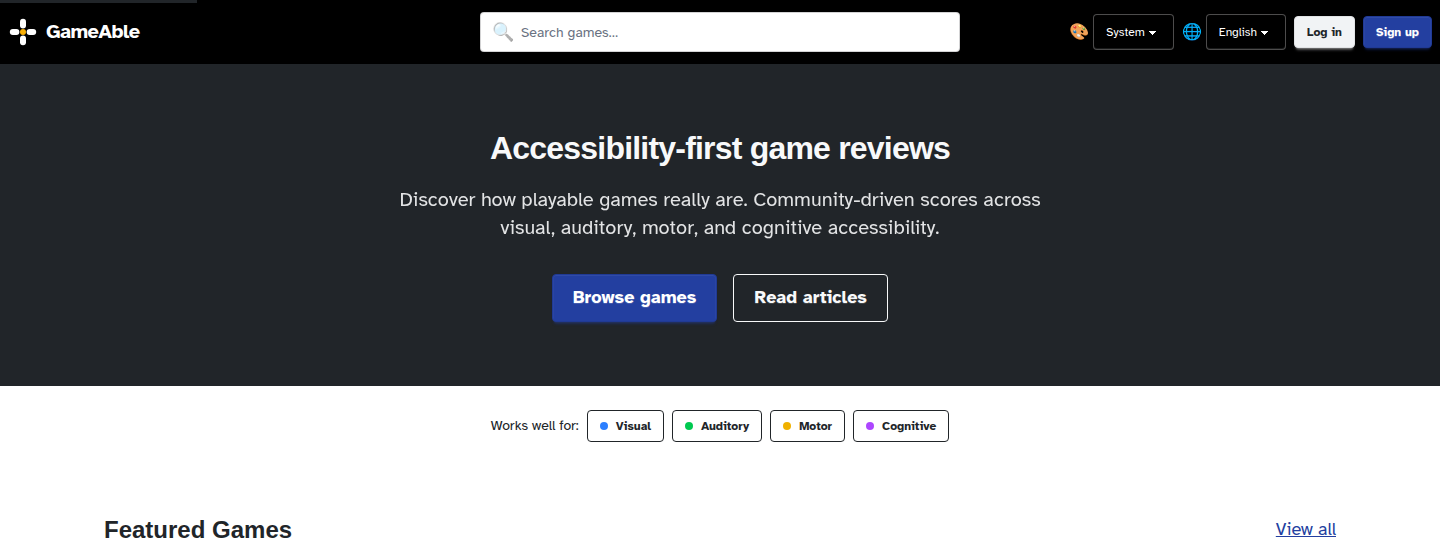
GameAble.
Accessibility-first game reviews: can I actually play this game, with my disability?
Key facts
- Status
- Activework in progress, not public yet
- Years
- 2025 – now
- Role
- Design and code.
- Stack
- SvelteKit
- TypeScript
- PostgreSQL
- Tailwind CSS
- Paraglide.js
- Storybook
- Playwright
- Highlight
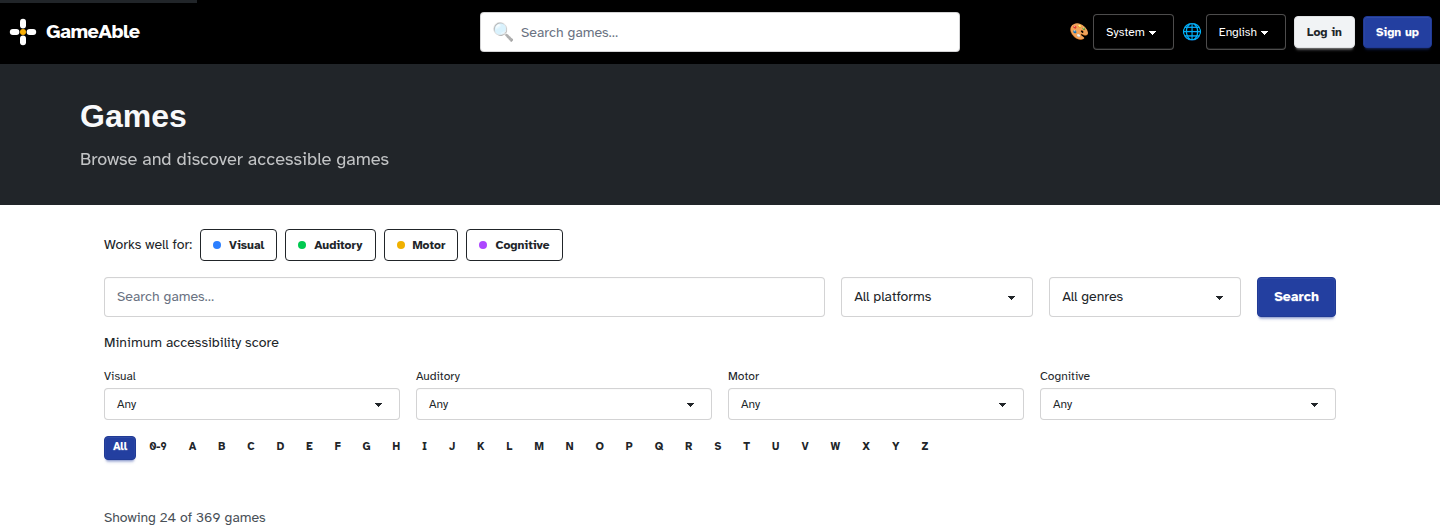
- 369 games scored on four accessibility axes, in six languages
Why I built it
GameAble started with a personal story. I'm the dad of a little girl with a rare genetic mutation (on the HNRNPH2 gene) that affects her fine motor skills and cognition. She loves Animal Crossing on the Switch.
So I went looking for other games she might enjoy, for advice, for trustworthy sources, and I didn't really find any. This site is my answer to that need: a Metacritic-meets-Wikipedia of game accessibility.
What it does
Every game is scored across four dimensions: visual, auditory, motor and cognitive accessibility. Players rate the dimensions that matter to them, and authors write in-depth guides and reviews that editors check before publication.
GameAble also collects accessibility information published by specialist sites, such as Can I Play That?, and shows it next to the community scores, with a link to the full review. The site is in six languages.
How it's built
SvelteKit runs as a Node.js server on top of PostgreSQL. There is no email and no password: an account is a cryptographic keypair generated in the browser, inspired by Nostr.
The site itself targets WCAG AAA. It offers the Lexica Ultralegible typeface, and every component is checked for accessibility in Storybook. Pages carry structured data and an llms.txt, so that language models can learn which games work for which disabilities.
Where it is now
GameAble is a work in progress, and not public yet: I am still working on the content and finishing the site. The next step is to grow the community of contributors, especially people with lived experience of disability.